Residential Sewage Pumping Systems: What Homeowners Need to Know
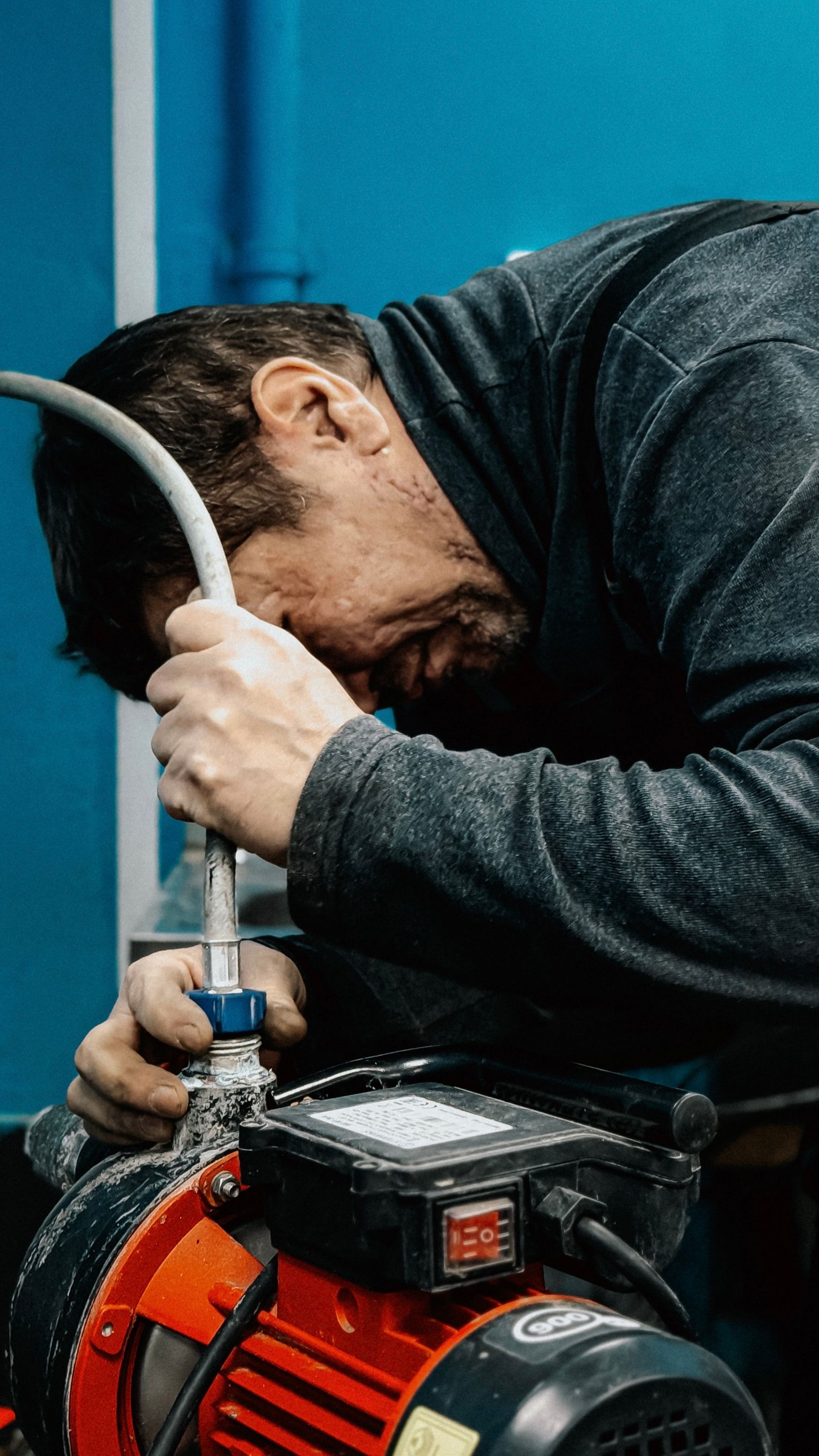
Most septic systems and municipal sewer connections rely on gravity to move wastewater from your house to its destination. But gravity doesn't always cooperate. If your septic tank sits higher than your house, if your basement has a bathroom below the sewer line, or if your home connects to a pressurized sewer main, you need a pump to make the system work.
Residential sewage pumping systems are more common than most people realize, and they add a layer of maintenance responsibility that gravity-fed systems don't have. Understanding what type of pump your home uses, how it works, and what it needs from you makes the difference between years of reliable service and an unpleasant surprise at the worst possible time.
Quick Answer: The most common residential sewage pumping systems are sewage ejector pumps (for moving raw sewage short distances to a septic tank or gravity sewer), grinder pumps (for long-distance or high-pressure applications), and effluent pumps (for moving pretreated liquid from a septic tank to a drain field). Most residential systems use a standard ejector pump, which costs $300 to $800 for the unit and lasts 7 to 10 years with proper maintenance.
When Your Home Needs a Sewage Pump
There are several common situations where a residential sewage pump becomes necessary rather than optional.
The most frequent scenario is a basement bathroom, laundry room, or utility sink that sits below the main sewer line leaving the house. Gravity can't push wastewater uphill, so a pump collects the waste in a sealed basin and pushes it up to the sewer line level where gravity takes over.
Another common situation is a property where the septic tank or municipal sewer main is located at a higher elevation than the house. In hilly or sloped terrain, this is fairly common. The pump moves wastewater from the house up to the system.
Some neighborhoods — particularly newer developments in flat areas — use pressurized sewer systems instead of gravity-fed mains. Every home in these areas has a grinder pump that pressurizes wastewater and pushes it through small-diameter pipes to the treatment plant. If your home is in a pressure sewer district, you may be responsible for maintaining the grinder pump, depending on local regulations.
Finally, many alternative septic systems — mound systems, drip distribution systems, and some aerobic treatment units — require a pump to move effluent from the septic tank to a drain field that's located at a higher elevation or requires pressure dosing for even distribution.
The Four Main Types of Residential Sewage Pumps
Not all sewage pumps are the same. Each type is designed for a specific application, and using the wrong one can cause failures, voided warranties, and system damage. Here's what each type does and where it belongs.
Sewage Ejector Pumps
The sewage ejector pump is the most common residential sewage pump. It's designed to handle raw, unground sewage — including solids up to about two inches in diameter — and move it from a collection basin to a septic tank or gravity-fed sewer main.
Ejector pumps work using an impeller (a spinning fan-like mechanism) that pushes wastewater upward through the discharge pipe. They're high-volume, low-pressure pumps, meaning they can move a large amount of waste over relatively short distances (typically under 750 feet horizontally and under 25 feet vertically).
The typical residential application is a basement bathroom or laundry room. A sealed basin — called a sewage ejector pit — collects the waste from the below-grade fixtures. When the water level rises to a set point, a float switch activates the pump, which evacuates the basin up to the main sewer line.
Most residential ejector pumps are 1/2 horsepower, which is sufficient for a typical home. They cost $300 to $800 for the pump unit itself, with installation running an additional $500 to $1,500 depending on the complexity of the plumbing.
Grinder Pumps
Grinder pumps are a more powerful type of sewage pump that includes cutting blades to grind solid waste into a fine slurry before pumping it. They operate at higher pressures than ejector pumps and can push wastewater over longer distances — up to several thousand feet horizontally and over higher vertical lifts.
Grinder pumps are the right choice when wastewater needs to travel a long distance to reach the sewer main, when the system connects to a pressurized sewer line, or when the vertical lift exceeds what a standard ejector pump can handle.
One important detail: grinder pumps require a minimum of about 30 feet of head pressure (back-pressure in the discharge line) to operate correctly. If there isn't enough resistance, the motor spins too fast and burns out prematurely. This means grinder pumps should not be used in applications where a standard ejector pump would suffice — they're not interchangeable.
Grinder pumps are also not recommended for septic systems. The finely ground slurry they produce disrupts the natural separation process inside the septic tank. If your home has a septic system, a standard ejector pump or effluent pump is almost always the correct choice.
Grinder pumps cost $1,000 to $3,000 or more for the unit, with professional installation adding $1,500 to $3,000.
Effluent Pumps
Effluent pumps handle a much easier job than ejector or grinder pumps. They're designed to move only the liquid effluent — the pretreated wastewater that has already passed through the septic tank and had solids removed. Because they're not handling raw sewage or solids, they're simpler, more affordable, and generally more reliable.
Effluent pumps are commonly used in septic systems where the drain field is located uphill from the tank or where a pressure-dosed drain field requires controlled distribution. They're installed in a pump chamber (dosing tank) that receives effluent from the main septic tank.
These pumps typically cost $200 to $600 for the unit and are the simplest to maintain of the three types.
Upflush and Macerating Systems
A less common but increasingly popular option for basement bathrooms is the upflush or macerating toilet system. These compact units combine a grinder and pump in a single enclosure installed directly behind or below a toilet. They macerate waste into a slurry and pump it through a small-diameter pipe to the main sewer line.
Upflush systems are designed for situations where installing a traditional ejector pit isn't feasible — such as a basement with a concrete slab that would be expensive to break open. They're relatively easy to install and don't require excavation, but they're limited to handling one or two fixtures.
Maintenance: What These Systems Need From You
Every sewage pumping system includes mechanical and electrical components that require attention. Unlike a gravity-fed septic system that operates passively, a pump system depends on a motor, float switches, and electrical connections to function. When any of those components fail, the system stops working — and wastewater has nowhere to go but back into your home.
Annual inspection is the baseline. A professional should check the pump, float switches, check valves, and alarm system (if you have one) at least once a year. During the inspection, the technician verifies that the pump activates and deactivates at the correct levels, the check valve is sealing properly to prevent backflow, and the electrical connections are secure and corrosion-free.
Listen for changes in how the pump sounds. A healthy pump produces a consistent hum when it runs. Grinding, rattling, or unusually loud operation can indicate a failing motor, a damaged impeller, or debris caught in the pump mechanism. Catching these signs early often means a repair rather than a full replacement.
Test the alarm regularly. Most modern pump systems include an alarm that sounds when the water level in the basin rises higher than normal — indicating the pump has failed or can't keep up with the flow. Test this alarm periodically (your owner's manual will explain how) to make sure it works when you need it. An alarm that fails silently defeats its entire purpose.
Keep the basin clean. Sewage ejector pits can accumulate debris over time — grease, non-flushable items, and sediment. During pump-outs or inspections, ask the technician to clean the basin and check the inlet pipes for obstructions.
Know the pump's age. Most residential sewage pumps last 7 to 10 years with proper maintenance. Some higher-quality units can last 15 years. If your pump is approaching the end of its expected lifespan, proactive replacement is almost always less expensive and less disruptive than emergency replacement after a failure.
Warning Signs of Pump Failure
Several symptoms suggest your sewage pump is struggling or about to fail. Recognizing them early gives you time to schedule a repair rather than dealing with a crisis.
The pump runs continuously or cycles on and off rapidly. This can indicate a stuck float switch, a check valve that's leaking and allowing water to flow back into the basin, or a pump that can't keep up with the incoming flow.
Sewage odors near the pump basin are normal at low levels, but strong or increasing odors suggest the basin isn't being evacuated completely or the sealed lid has a leak.
Water backing up from basement drains or the lowest fixtures in the house is the most obvious sign of pump failure — and the one that demands immediate attention. If you notice this, check the alarm first. If the alarm hasn't sounded, the alarm itself may have failed alongside the pump.
An alarm sounding with no visible backup means the pump isn't keeping up. It might be clogged, mechanically failing, or dealing with an unusually high volume of water (such as during heavy rain if you have a combined system).
Costs to Expect
The total cost of owning a residential sewage pumping system includes the initial installation, periodic maintenance, and eventual replacement.
For a standard sewage ejector pump system — the most common residential setup — expect to pay $800 to $2,500 for a complete installation including the pump, basin, piping, check valve, and labor. Annual inspections typically run $100 to $250. Replacement pumps cost $300 to $800 for the unit plus $200 to $500 for labor.
Grinder pump systems cost more across the board: $2,500 to $6,000 for installation, similar maintenance costs, and $1,000 to $3,000 for replacement units.
Effluent pump systems are the most affordable: $500 to $1,500 for installation and $200 to $600 for replacement.
When compared to the cost of a sewage backup cleanup — which can easily exceed $5,000 for water damage restoration, sanitation, and repairs — regular maintenance is a clear bargain.
Finding a Qualified Professional
Sewage pump installation and repair requires a professional who understands both the plumbing and electrical aspects of the system. In most jurisdictions, this work requires a licensed plumber. For pump systems connected to a septic system, a septic-licensed contractor may also be needed.
You can search for septic and sewage service providers in your area through our directory. When contacting providers, ask specifically about their experience with sewage pump systems — installation, repair, and maintenance. Not every plumber or septic company services pumps regularly, and experience with your specific type of system matters.
The Bottom Line
Residential sewage pumping systems are a reliable solution for homes where gravity alone can't move wastewater where it needs to go. Whether you have a standard ejector pump for a basement bathroom, a grinder pump for a pressurized sewer connection, or an effluent pump for a raised drain field, the maintenance requirements are straightforward: annual inspections, monitoring for warning signs, and proactive replacement before failure occurs.
These are mechanical systems, and all mechanical systems eventually need attention. The homeowners who stay ahead of that maintenance enjoy years of trouble-free service. The ones who ignore it get a sewage backup at 2 AM on a holiday weekend. Take care of your pump, and it will take care of you.