How Does a Septic System Work? A Homeowner's Complete Guide
If you've recently moved into a home with a septic system — or you've had one for years but never really understood what's happening underground — I want to give you a clear, straightforward explanation of how the whole thing works. No engineering jargon, no unnecessary complexity. Just a practical understanding of what your system does, how it does it, and why that matters for maintenance.
More than one in five American homes rely on a septic system rather than a municipal sewer connection. If you're one of them, the system buried in your yard is performing a critical job every day, and understanding it puts you in a much better position to take care of it.
Quick Answer: A septic system treats your home's wastewater in three stages. First, waste flows from your house into an underground tank where solids separate from liquids. Second, the liquid effluent flows out to a drain field — a network of perforated pipes buried in gravel trenches. Third, the soil naturally filters the remaining contaminants as the water percolates downward, returning clean water to the groundwater supply.
The Big Picture: What Your System Does
Every time you flush a toilet, run a faucet, take a shower, or do a load of laundry, wastewater leaves your home through a main sewer line. In a municipal sewer system, that water travels to a centralized treatment plant. In a septic system, it travels to a treatment system right on your property.
Your septic system's job is to separate solid waste from liquids, break down organic matter using natural bacteria, and disperse the treated liquid safely into the soil where it's filtered before reaching the groundwater. It accomplishes all of this passively — no electricity required for a conventional system, no moving parts, and no ongoing chemical treatment.
That simplicity is actually the system's greatest strength. With proper maintenance, a conventional septic system can operate reliably for 25 to 40 years.
Component One: The Sewer Line
The process starts with a single pipe — usually four inches in diameter — that carries all the wastewater from your home to the septic tank. This pipe relies on gravity, which is why it's installed at a slight downward slope away from your house. Every drain in your home — toilets, sinks, showers, dishwasher, washing machine — connects to this main line.
The sewer line is simple, but problems here can mimic septic system failure. Tree roots growing into the pipe, a crack or collapse, or a blockage from non-flushable items can all cause backups that seem like the tank is failing when the issue is actually in the line between the house and the tank. This is one reason why a professional diagnosis matters before assuming the worst.
Component Two: The Septic Tank
The septic tank is where the first and most critical stage of treatment happens. It's a large watertight container buried underground, typically made of concrete, fiberglass, or polyethylene. The most common residential tank size is 1,000 gallons, which is what most building codes require for a three-bedroom home.
When wastewater enters the tank through the inlet baffle, three distinct layers form over time.
The bottom layer is sludge — heavy solids that settle to the bottom of the tank. This includes everything from human waste to food particles to anything else heavy enough to sink.
The top layer is scum — lighter materials like grease, oil, fats, and soap residue that float to the surface.
The middle layer is the effluent zone — relatively clear liquid that sits between the sludge and scum. This is the treated water that eventually flows out of the tank and into the drain field.
The tank doesn't just store waste — it actively treats it. Naturally occurring anaerobic bacteria (bacteria that thrive without oxygen) break down the organic solids over time. This biological digestion reduces the volume of sludge and partially treats the wastewater before it leaves the tank. It's a slow process, and it's why the tank needs to hold wastewater long enough for settling and digestion to occur before effluent exits.
Modern tanks have two chambers separated by a dividing wall. Wastewater enters the first chamber, where most of the heavy settling happens. The partially treated effluent then flows through a port in the dividing wall into the second chamber for additional settling before exiting the tank. This two-stage design produces cleaner effluent for the drain field.
Two important components inside the tank are the inlet and outlet baffles. The inlet baffle directs incoming wastewater downward so it doesn't disturb the scum layer at the surface. The outlet baffle prevents scum from floating out of the tank and into the drain field pipes. If the outlet baffle fails, scum enters the drain field and can clog the soil — one of the most common causes of drain field failure.
Many modern systems also include an effluent filter at the outlet — a screen that catches any remaining solids before they leave the tank. These filters need periodic cleaning (usually during pump-outs), but they're an effective last line of defense for your drain field.
Component Three: The Distribution Box
After effluent leaves the septic tank, it flows to the distribution box — a small junction box that splits the flow evenly among the drain field's individual trenches. The distribution box ensures that wastewater is distributed uniformly across the entire drain field rather than overloading a single trench.
Not all systems have a separate distribution box. Some simpler designs use a single pipe that feeds directly into the drain field. But for systems with multiple drain field trenches, the distribution box is an important component that helps the field wear evenly over its lifetime.
Component Four: The Drain Field
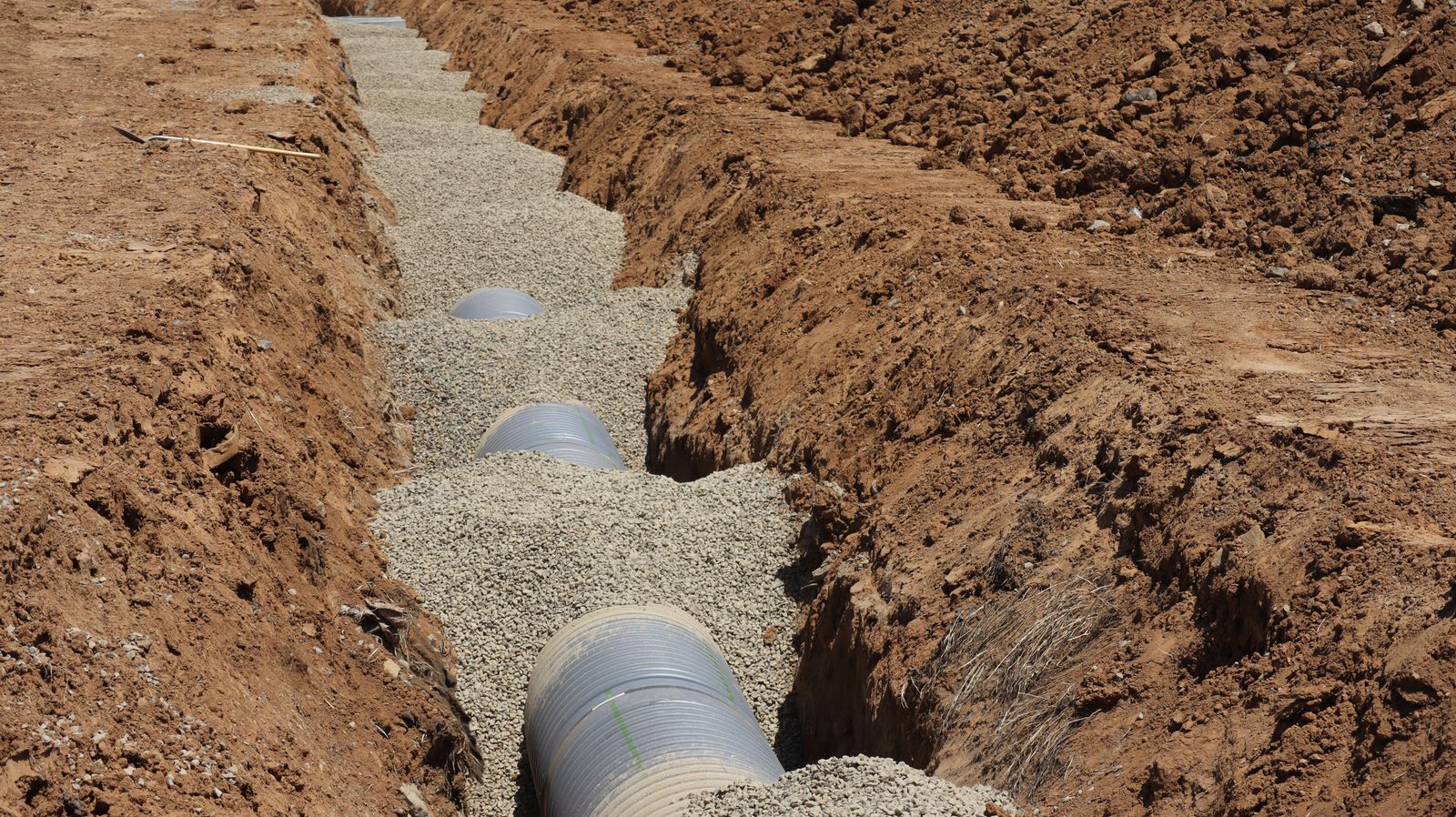
The drain field — also called a leach field or soil absorption field — is where the final stage of treatment happens. It consists of a series of perforated pipes laid in gravel-filled trenches beneath the soil surface.
Effluent flows from the distribution box into these perforated pipes and slowly seeps out through the holes into the gravel bed below. From there, it percolates downward through the natural soil. The soil acts as a biological filter — bacteria, viruses, nutrients, and other contaminants are removed as the water passes through layers of earth. By the time the water reaches the groundwater table, it's been naturally cleaned.
This soil treatment is the most effective part of the entire system. The biological and chemical processes happening in the soil remove pathogens and nutrients far more thoroughly than the tank alone. That's why the drain field's health is so critical — and why protecting it from damage should be a priority.
A functioning drain field is invisible. The ground above it looks like a normal part of your yard. You shouldn't see standing water, soggy soil, or unusually green grass over the drain field area. If you do, it's a warning sign that the field is struggling.
What About Pump Systems?
Conventional septic systems rely entirely on gravity to move wastewater from your house through the tank and into the drain field. But not every property's topography cooperates with gravity.
If the drain field is located uphill from the septic tank — or if the tank is positioned lower than the sewer line from the house — the system needs a pump to move the wastewater. These pump systems use a separate pump chamber (also called a dosing tank) that collects effluent from the septic tank and uses an electric pump to push it up to the drain field at controlled intervals.
Pump systems add mechanical components that require electricity and periodic maintenance. The pump, float switches, and alarm system should be inspected regularly to ensure they're working properly. A pump failure can cause effluent to back up into the home.
Common Types of Septic Systems
While the conventional gravity-fed system described above is the most common, several other designs exist for properties where soil conditions, space constraints, or local regulations require an alternative approach.
Aerobic treatment units use oxygen (pumped in by a mechanical aerator) to speed up the bacterial breakdown of waste. They produce cleaner effluent than conventional tanks and can be used in areas with challenging soil conditions. However, they require more maintenance, electricity, and regular inspections — typically three to four times per year.
Mound systems are used when the natural soil is too shallow, too permeable, or has a high water table. Instead of trenches dug into existing soil, the drain field is built upward in a specially constructed sand mound above the natural grade. These systems require a pump to push effluent up into the mound.
Chamber systems use plastic chambers instead of gravel-filled trenches in the drain field. They're easier to install and work well in areas with high water tables or where gravel is expensive.
Drip distribution systems use small-diameter tubing to distribute effluent evenly across a large area of soil in shallow doses. They're precise and effective but require more complex components and maintenance.
The type of system you have depends on when it was installed, your local soil conditions, the water table depth, and your county's regulations. If you're not sure what type of system you have, a septic professional can identify it during a routine inspection.
How to Protect Your System
Understanding how your system works makes it clear why certain maintenance practices matter.
Your septic tank relies on bacteria to break down waste. Pouring bleach, antibacterial cleaners, or chemical drain cleaners down the drain in large quantities kills those bacteria and reduces the tank's ability to process solids. Use cleaning products in moderation and avoid dumping unused chemicals down the drain.
Your drain field needs air and space to work. Don't park vehicles on it, build structures over it, or plant trees or large shrubs near it. Tree roots seek out moisture and will grow into the drain field pipes and gravel bed, causing blockages and damage. Grass is the only thing that should grow over your drain field.
Water conservation directly extends your system's life. The less water flowing through the system, the more time solids have to settle in the tank and the less strain on the drain field. Fix leaky faucets, use high-efficiency fixtures, and spread water-heavy activities across the week rather than doing them all on one day.
And of course, pump the tank on schedule. Every three to five years for most households keeps sludge levels in check and prevents solids from reaching the drain field. You can find septic service providers in your area through our directory to schedule a pump-out and inspection.
The Bottom Line
Your septic system is an elegantly simple piece of infrastructure. Wastewater flows from your house into a tank where solids settle out. The liquid moves to a drain field where soil naturally filters it clean. Bacteria do most of the heavy lifting, and gravity does the rest.
When you understand that process, the maintenance rules make intuitive sense: don't kill the bacteria, don't overload the system with water, don't clog the drain field with solids, and pump the tank before sludge builds up too far. Follow those principles and your system will work quietly underground for decades.